Results
Title |
Author | Citation | Alternate Citation | Summary | Type |
|---|---|---|---|---|---|
| Making the Change, One Conservative at a Time: A Review of Dominion: The Power of Man, the Suffering of Animals, and the Call to Mercy by Matthew Scully | Shennie Patel | 9 Animal L. 299 (2003) | This article provides a review of the book, Dominion: The Power of Man, the Suffering of Animals, and the Call to Mercy, by Matthew Scully. | Article | |
| Malane Wilson v. City of St. Louis; Dian K. Sharma, Health Commissioner, City of St. Louis Department of Health and Hospitals; R | This action concerns the release of a dog who was impounded and classified as “dangerous” without a chance for his owner to argue against the action. Plaintiff Malane Wilson filed a petition for a preliminary and permanent injunction, a petition for declaratory judgment, and a petition for replevin against the City of St. Louis and the Animal Regulation Center, among others. The subject of the petitions concerned her American Pit Bull Terrier named Max who was seized by agents of the Animal Regulation Center as an apparent “dangerous dog.” Plaintiff contends that Max’s alleged actions in killing the neighbor’s dog did not qualify under the St. Louis City Ordinance as a “dangerous dog.” Further, plaintiff was not given any legal or administrative hearing once her dog was seized, contrary to due process requirements. She also sought in her declaratory petition to have the ordinance declared illegal, void, and unconstitutional for its failure to adequately define “dangerous dog” and “potentially dangerous dog.” The Circuit Court for the City of St. Louis found that the plaintiff would suffer irreparable harm if the preliminary injunction was not granted. Thus, the City was enjoined from killing or otherwise harming Max. They were also ordered to release Max, remove his “dangerous” designation, and have him instead classified as “potentially dangerous.” The plaintiff was required to comply with enclosure and other safety requirements for Max. | Pleading | |||
| Malawi National Parks and Wildlife Act | No 11 of 1992 |
This law represented a major redraft of the old British game law. It protects endangered species and parks. It also sets out the general game law. Notably it also requires the use of environmental impact statements. |
Statute | ||
| Maldonado v. Fontanes | 568 F.3d 263 (C.A.1 (Puerto Rico),2009) | 2009 WL 1547737 (C.A.1 (Puerto Rico)) |
At issue in this particular opinion is the interlocutory appeal of the Mayor of Barceloneta, Puerto Rico based on the district court's denial of his motion to dismiss on the basis of qualified immunity. This case was initially brought after two successive raids on public housing complexes, within ten days of the Municipality of Barceloneta assuming control of the public housing complexes from the Puerto Rico Public Housing Administration on October 1, 2007. Prior to the raid, the residents, mostly Spanish-speakers, were given notice of the new "no pet policy," which were written in English. During the raids, plaintiffs' pets were seized and then killed by either being slammed against the side of a van or thrown off a 50-foot bridge. This First Circuit affirmed the denial of the Mayor's motion for qualified immunity on the Fourth Amendment and Fourteenth Amendment procedural due process claims. However, it reversed the denial of qualified immunity to the Mayor as to the plaintiffs' Fourteenth Amendment substantive due process claims and ordered those claims dismissed. |
Case | |
| Maldonado v. Fontanes |
This case was initially brought after two successive raids on public housing complexes, within ten days of the Municipality of Barceloneta assuming control of the public housing complexes from the Puerto Rico Public Housing Administration on October 1, 2007. Prior to the raid, the residents, mostly Spanish-speakers, were given notice of the new "no pet policy," which were written in English. During the raids, plaintiffs' pets were seized and then killed by either being slammed against the side of a van or thrown off a 50-foot bridge. This First Circuit affirmed the denial of the Mayor's motion for qualified immunity on the Fourth Amendment and Fourteenth Amendment procedural due process claims. However, it reversed the denial of qualified immunity to the Mayor as to the plaintiffs' Fourteenth Amendment substantive due process claims and ordered those claims dismissed. Included in the pleading documents are plaintiffs' second amended complaint filed in 2007 and plaintiffs' brief filed in December 2008. |
Pleading | |||
| Maldonado v. Franklin | Not Reported in S.W. Rptr., 2019 WL 4739438 (Tex. App. Sept. 30, 2019) | Trenton and Karina Franklin moved into a subdivision in San Antonio, Texas in September of 2017. Margarita Maldonado lived in the home immediately behind the Franklins’ house and could see into the Franklins’ backyard. Maldonado began complaining about the Franklins’ treatment of their dog. The Franklins left the dog outside 24 hours a day, seven days a week no matter what the weather was like. Maldonado also complained that the dog repeatedly whined and howled which kept her up at night causing her emotional distress. Maldonado went online expressing concern about the health and welfare of her neighbor’s dog, without naming any names. Mr. Franklin at some point saw the post and entered the conversation which lead to Mr. Franklin and Maldonado exchanging direct messages about the dog. Maldonado even placed a dog bed in the backyard for the dog as a gift. In December of 2017, the Franklins filed suit against Maldonado for invasion of privacy by intrusion and seclusion alleging that Maldonado was engaged in a campaign of systemic harassment over the alleged mistreatment of their dog. While the suit was pending, Maldonado contacted Animal Control Services several times to report that the dog was outside with the heat index over 100 degrees. Each time an animal control officer responded to the call they found no actionable neglect or abuse. In June of 2018, Maldonado picketed for five days by walking along the neighborhood sidewalks, including in front of the Franklins’ house, carrying signs such as “Bring the dog in,” and “If you’re hot, they’re hot.” The Franklins then amended their petition adding claims for slander, defamation, intentional infliction of emotional distress, and trespass. The trial court granted a temporary injunction against Maldonado, which was ultimately vacated on appeal. Maldonado filed a Anti-SLAPP motion and amended motion to dismiss the Franklins’ claims as targeting her First Amendment rights. The trial court did not rule on the motions within thirty days, so the motions were denied by operation of law. Maldonado appealed. The Court began its analysis by determining whether Maldonado’s motions were timely. Under the Texas Citizen’s Participation Act (TCPA) a motion to dismiss must be filed within sixty days of the legal action. The sixty-day deadline reset each time new factual allegations were alleged. Due to the fact that the Franklins had amended their petition three times and some of the amended petitions did not allege any new factual allegations, the only timely motions that Maldonado filed were for the Franklins’ claims for slander and libel. The Court then concluded that Maldonado’s verbal complaints to the Animal Control Service and online posts on community forums about the Franklins’ alleged mistreatment of their dog were communications made in connection with an issue related to a matter of public concern and were made in the exercise of free speech. Therefore, the TCPA applied to the Franklins’ slander and libel claims. The Court ultimately concluded that although Maldonado established that the TCPA applied to the slander and libel claims, the Franklins met their burden to establish a prima facie case on the slander and libel claims. Therefore, the Court ultimately concluded that Maldonado’s motion to dismiss the slander and libel claims were properly denied. The Court affirmed the trial court’s order and remanded the case to the trial court. | Case | ||
| Malloy v. Cooper | 592 S.E.2d 17 (N.C. 2004) | 2004 WL 190267 (N.C. 2004) |
Plaintiff owned a Gun Club and sponsored a pigeon shoot. He challenged the constitutionality of a statute prohibiting the intentional wounding or killing of animals. Held: unconstitutionally vague. |
Case | |
| Maloney v. State | 1975 OK CR 22 (Ok. App. 1975) | 1975 OK CR 22 (Ok. App. 1975) |
The State charged defendant with maliciously placing a dog in a pit with another dog and encouraging the dogs to fight, injure, maim, or kill one another. The trial court convicted defendant of cruelty to animals pursuant to Okla. Stat. tit. 21, § 1685 (1971) and fined defendant. Defendant appealed. On appeal, the court held that Okla. Stat. tit. 21, § 1682 (1971) was constitutional as applied to the case but reversed and remanded the case because the court determined that the defendant had been improperly convicted under the anti-cruelty statute rather than the dogfighting statute. |
Case | |
| Malpezzi v. Ryan | 28 A.D.3d 1036 | 815 N.Y.S.2d 295, 2006 WL 1096637 |
In this New York case, the plaintiff brought an action to recover for a dog bite sustained when she was walking on a local bike path. The court noted that it has consistently held, “a plaintiff may not recover for injuries sustained in an attack by a dog unless he or she establishes that the dog had vicious propensities and that its owner knew or should have known of such propensities” Here, defendant and his girlfriend testified, without contradiction, that they did not experience any problems with the dog prior to the incident with Malpezzi. Specifically, each testified that Oreo did not display any act of aggression prior to biting Malpezzi. In opposition, plaintiff primarily relies upon the purportedly vicious nature of the attack, the fact that Oreo allegedly was restrained while on defendant's property and Oreo's specific breed. However, the court observed that where, as here, there is no other evidence even suggesting that defendant knew or should have known of Oreo's allegedly vicious propensities, consideration of the dog's breed is irrelevant. As such, Supreme Court erred in denying defendant's motion for summary judgment dismissing the complaint. |
Case | |
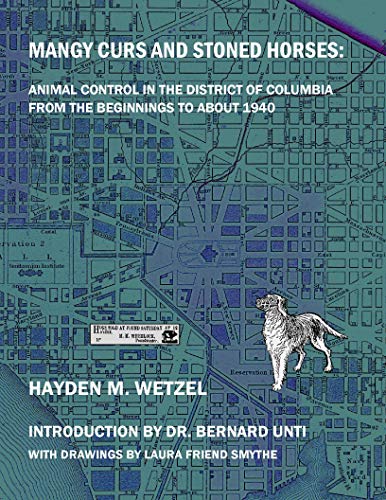
| Mangy Curs and Stoned Horses: Animal control in the District of Columbia from the beginnings to about 1940 |
|
Policy |