Results
Title |
Author | Citation | Summary | Type |
|---|---|---|---|---|
| The Jaws That Bite, The Claws That Snatch | Joseph K. Scott | 62 LALR 303 (Fall, 2001) |
This article explores the incongruity between the recent Louisiana decision in State v. Michels that allowed for the presence of a seemingly vicious dog to sustain the element of "dangerous weapon" in an aggravated sexual battery conviction. Louisiana traditionally only allows inanimate objects to be construed as weapons for dangerous weapons charges. The author suggests the Louisiana judiciary should align itself with the national jurisprudence to allow animate objects be viewed as dangerous weapons for the purpose of criminal prosecutions. |
Article |
| THE KENTUCKY HORSE: THE REALITY VS. THE MYTH AND WHAT COULD BE DONE TO CLOSE THE GAP | Virginia F. Coleman | 21 Animal L. 181 (2015) | The iconic status of the horse in Kentucky belies the bitter reality faced by the vast majority of horses in that state. This Article explains how multiple aspects of the current law enforcement system in the state permit the persistent failure to protect horses against gross neglect and abuse, as exemplified in particular by two case studies. The Kentucky Equine Health and Welfare Council, a legislative construct promoted by its backers as a unique safeguard for Kentucky horses, was in fact ill-suited ab initio for this role and has proved uninterested in it. Although there is no legislative cure for indifference on the part of those charged with enforcing laws against neglect and abuse, there are a number of legislative changes that would improve the now lamentable odds faced by Kentucky's horses. These changes, discussed in Part IV of this Article, are designed to increase the likelihood of action being taken against an offender, including through civil as well as criminal proceedings; secure immediate care for horses which have been victimized and prevent recidivism by offenders; increase the severity of the offense; dampen the current robust market for slaughter horses, and fund the costs inherent in creating a more effective enforcement system. All of the changes proposed are already law in at least some other states-in some instances in many other states--and these existing laws offer a ready model for Kentucky to follow if it so chooses. Although the focus of this Article is on Kentucky, all the legislative recommendations made are more broadly applicable to any state which does not yet have a statute as proposed in place. | Article |
| THE KITTLES CASE AND ITS AFTERMATH | Joshua Marquis | 2 Animal L. 197 (1996) | This article was adapted from remarks from Joshua Marquis at a symposium held by the Student Animal Legal Defense Fund of Northwestern School of Law of Lewis & Clark College on September 23, 1995 regarding issues affecting domestic and captive animals. | Article |
| The Lacey Act: America's Premier Weapon in the Fight Against Unlawful Wildlife Trafficking | Robert S. Anderson | 16 Pub. L. L.R. 27 (1995) |
Part I of this article discusses the scope of the illegal wildlife trade and the various federal statutes addressing that problem. Part II discusses the legislative history of the Lacey Act and its companion statute, the Black Bass Act, including their ultimate combination into one law in 1981 and the Lacey Act's latest amendments in 1988. Part III discusses the elements necessary to prove a Lacey Act trafficking violation, analyzes judicial interpretations of the Act's statutory language, and considers available sanctions. Part IV discusses issues that may arise in Lacey Act litigation, including specific requirements of the underlying "predicate" law. |
Article |
| The Laws Concerning Game (1753) | William Nelson | The Laws Concerning Game (1753) |
This is nice summary of the history of English Game Law from 1066 - 1700's. The following is the introduction from the book. |
Article |
| The Least of the Sentient Beings' and the Question of Reduction, Refinement, and Replacement | Joseph Vining | Vining, Joseph. "'The Least of the Sentient Beings' and the Question of Reduction, Refinement, and Replacement." Law Quad. Notes 46, no. 2 (2003): 82-8. | The subjects of this article are biomedical research and animals. In raw percentage terms, the animals involved in experimentation are now overwhelmingly rats and mice, and, perhaps because they are rats and mice, they are used in large numbers, numbers in thousands and tens of thousands at some institutions. Legal, ethical, and practical accommodation to this fact on the ground presents a host of questions. There are questions of the cost of care. There are questions of the training of veterinarians, principal investigators, and laboratory personnel. With mice particularly, there are questions about the creation of conditions in an animal that do not yet exist, a future animal, by knocking out a gene and, as we say, "seeing what happens": new questions, really, that move us away from the traditional focus on the details of how an investigator treats a living animal. Then there are the central questions of weighing costs and benefits, of justification and the application of the three R's of reduction, refinement, and replacement, where it is not dogs or primates or marine mammals that are concerned, but rats and mice - for many, the least on the scale of concern for animals. Rats, mice, and birds have of course been recently exempted from the Animal Welfare Act. But that may be viewed as making the questions only that much more difficult, thrown back into the laps of researchers themselves and review boards, veterinarians, laboratory assistants, and university and corporate administrators, who for the moment can expect to have that much less outside guidance or mandate in deciding what to do. The overarching problem, which is how to think about rats and mice, not a new problem at all, but newly pressing. | Article |
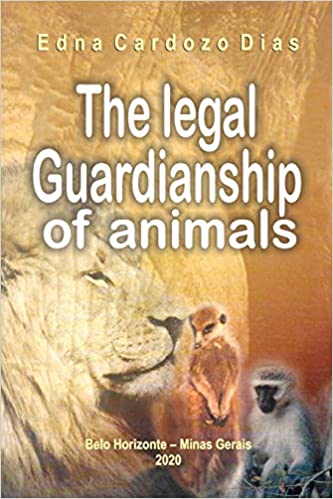
| The Legal Guardianship of Animals |
|
Policy | ||
| The Link Among Animal Abuse, Child Abuse, and Domestic Violence | Mellisa Trollinger | 30-SEP Colo. Law. 29 (September, 2001) |
This article discusses the link among animal abuse, child abuse, and domestic violence, with the intention of increasing attorney awareness of how such abuse impacts both clients and the community. |
Article |
| The Link: Cruelty to Animals and Violence Towards People | Cynthia Hodges | Animal Legal & Historical Center |
The article explores the connection between cruelty to animals and human violence. In particular, it examines animal abuse perpetrated by adolescents as a predictor of later human violence. |
Article |
| THE LIZARD, THE SCIENTIST, & THE LAWMAKER: AN ANALYSIS OF THE TRENDING FIGHT OVER THE USE OF SCIENCE UNDER THE ENDANGERED SPECIES ACT AND HOW TO ADDRESS IT | Brie D. Sherwin | 20 Animal L. 357 (2014) | Recently in Texas, the dunes sagebrush lizard—a tiny, little-known reptile living in the sparse brush and dunes of the oil and gas fields—sparked a heated discussion and criticism over the listing process under the Endangered Species Act (ESA). This six-year battle ended with the withdrawal of a proposed rule to list the lizard and resulted in numerous criticisms about the role and use of scientific data throughout the process. Under the ESA, the United States Fish & Wildlife Service (FWS) is required to consider the best available scientific data when deciding whether to list a species. However, there is no direct legislative history explaining this standard. Because existing scientific data on “stressors” in the environment is typically limited and inadequate, this data gap leads to uncertainty, which unquestionably leads to difficult decision making by the regulatory agencies. Although a review of past listing designations confirms that FWS is not only utilizing sound science, but more often than not, is making sound decisions based on that science, many policy makers are still criticizing the use of science in decision-making processes and are pitting science against economics. This Article advocates for a more systematic, transparent application of science in the decision-making process: a well-defined “weight of evidence” approach that will foster structured deliberations, hypothesis testing, and the necessary clarity and transparency that will benefit all parties involved. | Article |