Results
Title |
Citation | Alternate Citation | Summary | Type |
|---|---|---|---|---|
| Sammons v. C.I.R. | 838 F.2d 330 (9th Cir. 1988) |
In a tax proceeding, the Commissioner argues that defendant should be disallowed a charitable deduction for donating several artifacts containing eagle parts to a museum because it will frustrate the purpose behind the BGEPA. The court disagrees, finding it unlikely that such an allowance will encourage others to procure eagle artifacts for the sole purpose of obtaining a tax deduction. Further, the court disagrees with the Commissioner that Sammons acquired illegal title to the artifacts, finding Sammons had sufficient ownership interest in the eagle artifacts for donation. For further discussion on commerce in eagle parts under the BGEPA, see Detailed Discussion of Eagle Act. |
Case | |
| Sample California Criminal Protection Order for Domestic Violence |
On January 1, 2009, this new protective order will be in effect in the State of California. This revised protective order includes Section 5, "For good cause shown, the court grants the protected persons named above the exclusive care, possession, and control of the following animals." |
Pleading | ||
| Sample Post |
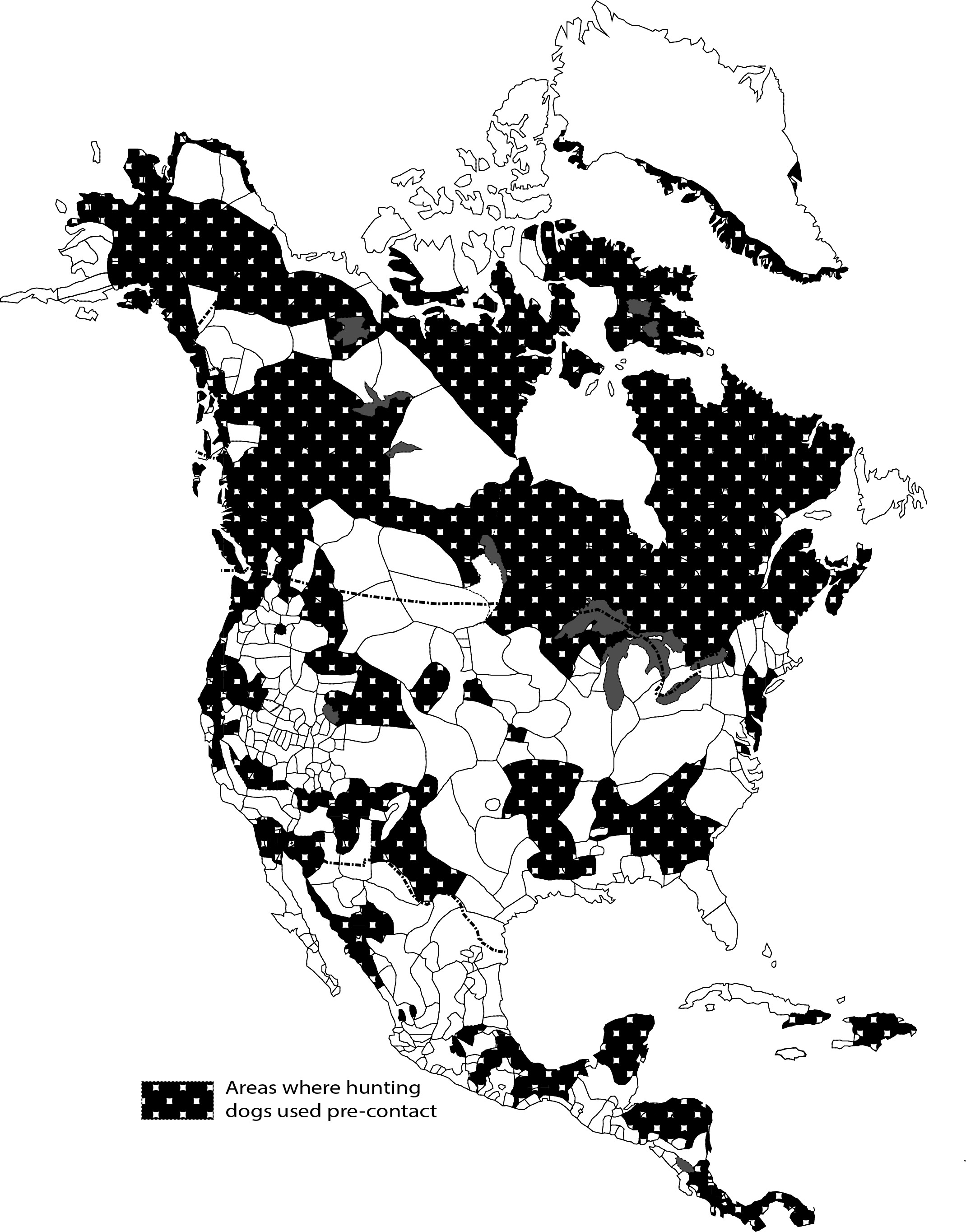
Sample Post of Dog Map
|
Policy | ||
| Sample Table to Copy | Topic Table | |||
| Sample Voir Dire Questions -- Horse Neglect Case, Noah's Arc Case |
These are some sample voir dire questions. One from a horse neglect case; one is from the "Noah's Arc Case." |
Pleading | ||
| SAMUEL ZIMMERMAN v. UNITED STATES OF AMERICA AND SECRETARY OF AGRICULTURE | 57 Agric. Dec. 869 (1998) | 1998 WL 1806372 (U.S.D.A.) | Agency's choice of sanction is not to be overturned unless it is unwarranted by law, unjustified by facts, or represents abuse of discretion; sanction is not rendered invalid in particular case because it is more severe than sanctions imposed in other cases. | Case |
| San Jose Charter of Hells Angels Motorcycle Club v. City of San Jose | 402 F.3d 962 (C.A.9 (Cal.),2005) | 05 Cal. Daily Op. Serv. 2853, 2005 Daily Journal D.A.R. 3920 |
In this civil rights action under 42 U.S.C. § 1983, Defendants-Appellants, seven San Jose City Police Officers and Deputy Sheriff Linderman, appeal from an order of the district court denying in part their motions for qualified immunity. This action arises out of the simultaneous execution of search warrants at the residences of members of the Hells Angels, and at the Hells Angels clubhouse on January 21, 1998. While executing search warrants at two plaintiffs' residences, the officers shot a total of three dogs. This court held that the shooting of the dogs at the Vieira and Souza residences was an unreasonable seizure, and an unreasonable execution of the search warrants, in violation of the Fourth Amendment. Exigent circumstances did not exist at either residence, as the officers had a week to consider the options and tactics available for an encounter with the dogs. The unlawfulness of the officers' conduct would have been apparent to a reasonable officer at the time the officers planned for serving the search warrants. |
Case |
| Sanders v. Frank | 37 N.E.3d 1305 (Ohio App. 11 Dist. 2015) |
In this case, Heather Sanders filed suit against Joseph D. Frank after she suffered injuries as a result of rescuing Frank’s horses that were running at large. The lower court dismissed Sander’s complaint with prejudice and Sanders appealed. On appeal, Sanders asserted four main arguments: (1) the doctrine of contributory negligence and assumption of the risk should not be applied when defendant negligently violates a statute; (2) the rescue doctrine should preclude the assumption of the risk doctrine even though Sanders voluntarily assisted in the capture of the horses; (3) the trial court erred in applying the assumption of risk doctrine; and (4) the trial court erred by preventing recovery of damages. Ultimately, the court of appeals reviewed the case and affirmed the lower court’s decision to dismiss the complaint. The court found that all four of Sander’s arguments were without merit. The court held that although Frank had negligently violated a statute, allowing his horses to escape and run at large, Sanders voluntarily assisted in the capture of the horses and was not responding to any immediate emergency or threat to human life. Also, the court pointed out that Sanders had “assumed the risk” based on the fact that she had helped rescue Frank’s horses in the past. As a result, the lower court did not err in dismissing Sander’s claim based on contributory negligence and the assumption of the risk doctrine. |
Case | |
| Santa Paula Animal Rescue Center, Inc. v. County of Los Angeles | 313 Cal. Rptr. 3d 566 (2023), reh'g denied (Oct. 16, 2023), review denied (Dec. 13, 2023) | 95 Cal.App.5th 630 (Cal.App. 2 Dist., 2023) | This case was brought by plaintiff-appellants, several no-kill animal shelters, against defendant-appellee the County of Los Angeles. Plaintiffs filed a petition for writ of mandate against defendant seeking to compel the release of impounded dogs scheduled for euthanasia to plaintiffs. The court sustained defendant’s demurrer without leave to amend, and this appeal followed. Plaintiffs argue on appeal that the Hayden Act imposes a duty on defendant to release the dogs scheduled for euthanasia to plaintiffs. First, the court asked whether defendant had discretion to refuse to release, and then to euthanize, a dog deemed to have behavioral problems when release has been requested by a non-profit animal adoption or rescue organization? Second, the court asked if defendant had discretion to determine and impose requirements for organizations that claim to be animal rescue or adoption organizations to qualify as such, beyond simply ensuring that the organizations are non-profits under section 501(c)(3) of the Internal Revenue Code? The court examined the relevant code, which stated that “any stray dog that is impounded pursuant to this division shall, before the euthanasia of that animal, be released to a nonprofit” and agreed with plaintiffs’ argument that the use of the word shall indicates that the legislature intended to impose a duty on defendant to release these dogs upon request to qualified nonprofit animal rescue or adoption agencies. The court also concluded that the demurrer was improperly granted as defendant lacked discretion to withhold and euthanize a dog based upon its determination that the animal has a behavioral problem or is not adoptable or treatable. The court agreed, however, that defendant had discretion to determine whether and how a non-profit organization qualifies as an animal adoption or rescue organization. The court reversed the judgment of the trial court, vacated the trial court’s order sustaining the demurrer without leave to amend, and remanded to the trial court. | Case |
| Sanzaro v. Ardiente Homeowners Association, LLC | --- F.Supp.3d ----, 2019 WL 1049380 (D. Nev. Mar. 5, 2019) | 2019 WL 1049380 (D. Nev. Mar. 5, 2019) | Deborah Sanzaro and Michael Sanzaro are the plaintiffs in this action. Plaintiffs are homeowners and members of a homeowners association ("HOA"). Three incidents occurred at the HOA clubhouse in which Deborah Sanzaro attempted to enter with her Chihuahua, which she claimed was a service animal. In each of these three incidents, Deborah was denied access to the clubhouse. The first incident occurred on March 11, 2009. Deborah entered the club house with her dog and the manager of the HOA asked her why she brought the dog into the clubhouse with her. Deborah explained that her dog assisted her with her disability and was a service animal, however, she could not provide any documentation to the manager as to that effect. She was then asked to leave the clubhouse to which she refused. Only after security was called did Deborah leave. Later, on that same day, Deborah entered the clubhouse with her service dog without any incident. The HOA sent a letter to the plaintiffs after the first incident notifying them that that Deborah had violated the HOA’s governing documents and that a hearing before the HOA board would take place on March 30, 2009. Plaintiffs never showed for this hearing which ultimately resulted in the Board finding that Deborah violated HOA rules and regulations by entering the clubhouse with her dog and not providing documentation. Deborah was assessed multiple fines. Prior to the hearing, the HOA sent out letters to the other residents letting them know that they would accommodate any legitimate service animal if their staff is properly advised of such. They also mailed out a letter regarding the incident with the plaintiffs to all of the other residents. The plaintiffs began to receive hate mail and verbal harassment regarding their dispute with the HOA board. The plaintiffs received many threats and had their property defaced by an anonymous homeowner who spray painted their garage door telling them to get out of the neighborhood. The HOA did nothing to stop this harassment. Plaintiffs filed a complaint with the Nevada Real Estate Division and their claim was submitted to a non-binding arbitrator. Deborah provided a doctor’s statement requesting that her dog be registered as a service dog, a notice of entitlement to disability benefits from the SSA, a doctor’s statement regarding Deborah’s disability, and a statement from Deborah explaining how her dog had been trained to assist her. The Arbitrator found for the Ardiente Homeowners Association because she did not find Deborah’s explanation as to why she needed the dog as being persuasive. The arbitration decision was upheld by the Eighth Judicial District Court of Clark County, Nevada as well as by the Nevada Supreme Court. On July 26, 2010, Plaintiffs entered the clubhouse again with the dog. They were told that they could not come in unless they provided more documentation despite the documentation that the Deborah had provided during the arbitration proceeding. On January 29, 2011 the plaintiffs entered the clubhouse again with the dog and they were again denied entry until the plaintiffs could provide documentation that the dog was a registered service animal. The HOA eventually foreclosed on the plaintiff’s home in order to recover the fines and attorney’s fees that were owed. Plaintiffs then brought 102 causes of action in federal court under the ADA and FHA which were pared down to two questions: (1) whether the HOA clubhouse was a place of public accommodation under the ADA and NRS § 651.075, and (2) whether Plaintiffs requested, and were ultimately refused, a reasonable accommodation under the FHA. For the plaintiff ADA claims, the District Court found that Deborah is disabled as a matter of law and that the HOA and other defendants were aware of her disability at least as of July 27, 2009 (the date of the arbitration). The Court also found that the clubhouse was not a place of public accommodation and that the entire community including the clubhouse was a private establishment. As a result the plaintiffs were not able to establish a claim for disability discrimination under the ADA. For the plaintiff’s FHA claims, the Court found the following: Deborah was qualified as handicapped under the FHA; the defendants were reasonably expected to know about her handicap; an accommodation was necessary for Deborah to use the clubhouse; the dog qualified as a service animal and permitting the dog to accompany Deborah was a reasonable accommodation; and the defendants refused to make the requested accommodation which makes them liable. For the Nevada law claim, it failed because the community and clubhouse are a private establishment and were not considered public accommodations. Plaintiffs were entitled to damages for their FHA claims only. The Court ultimately found in favor of the plaintiffs and awarded $350,000 in compensatory damages, $285,000 in punitive damages and attorneys’ fees and costs of litigation. | Case |