Results
Title |
Author | Citation | Summary | Type |
|---|---|---|---|---|
| Resolution No. 14, 2024, Accion de Amparo Rio Maranon- Peru- Do Not publish yet | Resolución 14, 2024, JUZGADO MIXTO-Nauta I |
Resolution No. 14, 2024, Accion de Amparo Rio Maranon- Peru- Do Not publish yet |
Case | |
| Resolution No. 3, Exp Resolución Nro. 03, 01128-2023-0-1814-JR-PE-03, Dachi, the dog - Peru | 01128-2023-0-1814-JR-PE-03 | In this matter, a man repeatedly stabbed his girlfriend’s dog, “Dachi,” after she confessed to having an affair with his friend. The man had been drinking and taking drugs, and in his anger, took violent action against Dachi as revenge against his girlfriend. Dachi survived, but veterinarians were unsure of how long Dachi would live or her quality of life. The man was later found to have psychological instabilities and had committed several other crimes. He was convicted of crimes against property and cruelty to animals and was given an incarceration sentence and a civil fine. | Case | |
| Resolution N° 07, 2023, Caso Kira - Peru | CUARTO JUZGADO PENAL UNIPERSONAL TRANSITORIO SEDE CARABAYLLO, Resolucion No. 7, 2023 | The plaintiff filed a lawsuit against the defendant, arguing the defendant committed a crime against his patrimony and cruel acts against animals under the criminal code. The plaintiff attended a social gathering with her children and left their two dogs, Kira and Logan, playing outside. The plaintiff returned to their home to find that their neighbor, the defendant, had committed an act of bestiality against Kira. The court discussed several constitutional questions and theories of punishment. It weighed the factors of what the defendant had done to Kira with his lack of prior record and low chance of recidivism. The court decided that the defendant was to serve 17 months of incarceration and was required to pay civil fines for the suffering of both the plaintiff and Kira. Rooted in the issue of animal welfare, too, was its holding in prohibiting the defendant from “keeping” animals to further reduce the risk of recidivism. Ultimately, the court based its decisions on grounds of animal welfare and condemnation of cruelty towards animals. | Case | |
| Resolving Confusion in Pet Owner Tort Cases: Recognizing Pets' Anthropomorphic Qualities Under a Property Classification | Lynn A. Epstein | 26 SILULJ 31 (Fall, 2001) |
The author examines the important role pets play in our lives in contrast with their nominal assessed market value by courts. The author then provides a uniform suggestion that will enable courts to standardize an owner's pet loss claim. Courts should continue to classify pets as property, yet relax the classification standard to permit a flexible market value analysis that includes the right to assert a punitive damage claim as a means of providing adequate and fair recompense to the grieving pet owner. |
Article |
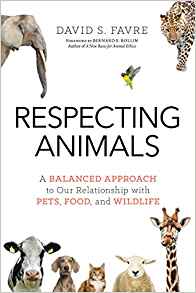
| Respecting Animals: A Balanced Approach to Our Relationship with Pets, Food, and Wildlife |
|
Policy | ||
| Responsibility in the "Sport of Kings": Imposing an Affirmative Duty of Care on the Primary Financial Beneficiaries of the Thoroughbred Horseracing Industry | Caroline L. Mayberger | 4 Stan. J. Animal L. & Pol'y 64 (2011) | Horseracing industry participants must be held accountable for the wellbeing of retired racehorses. In Part I of this article, I explore the historic role of the horse in American society, and explain how “unwanted horses” become neglected, abused, abandoned, or shipped across U.S. borders to be slaughtered. In Part II, I address the unique susceptibility of thoroughbred racehorses to becoming unwanted horses, and how the wealth and glamour associated with horseracing serves to mask the problem. In Part III, I outline the legislation pertaining to horseracing, arguing that it does not adequately ensure the welfare of ex-racehorses. In Part IV, I explain that the burden for caring for these horses falls to under-funded private horse Rescue/Adoption/Retraining facilities (hereinafter “RAR facilities”). In Parts V and VI, I employ a loss-spreading rationale and the reasoning behind the “special relationship” doctrine, contending that the cost of providing adequate funds to RAR facilities should be imposed on the Primary Financial Beneficiaries (hereinafter “PFBs”) of the horseracing industry. In Part VII, I argue that this financial burden should be placed on PFBs in the form of “Participation Fees” proportional to the PFB’s level of investment in the industry. In Part VIII, I contend that this mandate could be carried out by either private state racing associations, the National Thoroughbred Racing Association, state governments, or the federal government. In Part IX, I further explore the logistics of implementing such a scheme. | Article |
| Restricting the Use of Animal Traps in the United States: An Overview of Laws and Strategy | Dena M. Jones & Sheila Hughes Rodriguez | 9 Animal L. 136 (2003) |
Enacting absolute bans on the use of trapping devices and on commerce in trapped animal products has been difficult. Nearly every state, however, has enacted some restrictions on who can trap, what animals can be trapped, where and when animals can be trapped, the type and size of permitted traps, and how often traps must be checked. This article summarizes past and potential approaches to curtail the use of traps in the U.S. at federal, state and local levels. The article also notes litigation related to trapping and trapping prohibitions. |
Article |
| Resurrecting the International Whaling Commission: Suggestions to Strengthen the Conservation Effort | Adrienne M. Ruffle | 27 Broklyn J. Int'L. 639 (2002) |
One of the failures of the IWC is the inability to punish infractions. The United States has unilaterally enacted two pieces of legislation intended to augment the enforcement power of the IWC through import and fishing sanctions against countries who violate the regulations set forth by the IWC. These unilateral amendments have failed in the protection of whales. |
Article |
| Rethinking the Irreparable Harm Factor in Wildlife Mortality Cases | Avalyn Taylor | 2 Stan. J. Animal L. & Pol'y 113 (2009) |
This article is divided into three parts. Part I explores how federal courts have defined and analyzed the issue of irreparable harm in cases similar to Humane Society, in which plaintiffs seek preliminary injunctions to prevent the killing of wildlife until their cases can be heard on the merits. In Part II, the author asserts that reform is needed in this area of the law for two primary reasons. In Part III, the author proposes a new model directing courts to define the scope and nature of the harm to be considered by looking to the “primary purpose” of the statute at issue. |
Article |
| Review of animal welfare legislation in the beef, pork, and poultry industries | Peter Stevenson, Daniela Battaglia, Carmen Bullon, Arianna Carita | Stevenson, Peter et al. (2014). Review of animal welfare legislation in the beef, pork, and poultry industries. Food and Agriculture Organization United Nations. | This study aims to give an overview of the legal framework that applies to animal welfare in the EU and a group of non-EU countries. It focuses specifcally on beef cattle, pigs, broilers (the chickens reared for meat) and egg-laying hens while they are on the farm, in transit and at slaughter. Animal welfare standards of four international organizations, as well as a number of private standards established by major food businesses and animal welfare organizations are also analyzed. | Article |