Results
Title |
Author | Citation | Summary | Type |
|---|---|---|---|---|
| THE FUND FOR ANIMALS, INC., ET AL., appellants v. U.S. BUREAU OF LAND MANAGEMENT, ET AL., appellees |
The Fund for Animals and individuals dedicated to protecting animals brought an action against Bureau of Land Management (BLM) challenging its implementation of its restoration strategy for wild horses and burros on public lands. The approved budget request made by the BLM, which contained outlines of the reinvigorated wild horses and burros program and set broad goals and strategies, was not an “agency action” subject to review. Finally, plaintiffs request for a permanent injunction, to prevent BLM from carrying out specified removal actions, was moot because the “gathers” have already occurred and what happens in the future is based on unknown variables. |
Pleading | ||
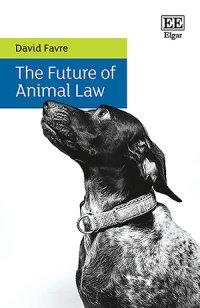
| The Future of Animal Law |
The Future of Animal Law, David Favre, Professor, Michigan State University College of Law, Edward Elgar Publishing (2021).
|
Policy | ||
| The Future of the African Rhinoceros: Its Anything But Black & White | Robert Saxton | Animal Legal & Historical Center |
This paper will briefly review the biology and ecology of the various African rhino species and subspecies before presenting a description of the major current threats to African rhinos. The international legal response to rhino population declines will be outlined, followed by a discussion of concurrent rhino population trends. Suggestions for the future legal protection of rhinos will follow. |
Article |
| The Future of Veterinary Malpractice Liability in the Care of Companion Animals | Christopher Green | 10 Animal L. 163 (2004) |
This comment investigates the factual bases of arguments from the veterinary community and of those that support increasing the malpractice liability of veterinarians. Combining law and economics theory with basic mathematics to evaluate the validity of these positions, it then suggests specific measures for legislatively addressing those parties' concerns. |
Article |
| The Gastronomic Cat Festival case, 2014 (Peru) | The Currunao Festival was an annual event held in southern Lima, Peru. This festival was a celebration dedicated to Santa Efigenia of Ethiopia. Traditionally, this festival included controversial practicesof consuming cats and subjecting them to races where fireworks were thrown at them. In 2013, a group of activists filed an Amparo lawsuit, seeking the immediate suspension of these practices, arguing these practices were cruel under Peru's former anti-cruelty law, No. 2725. Moreover, they stated that animals are sentient beings capable of experiencing pain and suffering. That same year, the Civil Judge in Cañete issued a temporary injunction, suspending these activities. In 2014, the Superior Court of Justice in Cañete permanently banned the practices, ruling that they violated the right to a balanced and healthy environment, fostered violence, and posed serious risks to public health and societal well-being. | Case | ||
| The Gathering Momentum | David Favre | 1 Journal of Animal Law 1 (2005) |
This article provides introductory remarks to the Journal of Animal Law by Professor David Favre. |
Article |
| The Golden Retriever Rule: Alaska's Identity Privilege for Animal Adoption Agencies and for Adoptive Animal Owners | John J. Tiemessen | 21 Alaska L. Rev. 77 |
In this Comment, the authors examine recent national and Alaskan developments regarding a limited testimonial privilege for animal adoption agencies and adoptive owners. Unlike most testimonial privileges, this new privilege e did not exist at common law and has only a limited foundation in statutes or rules of evidence. The authors conclude by noting the effect this privilege has on replevin and conversion cases involving lost animals that have been adopted by new owners. |
Article |
| The Historical and Contemporary Prosecution and Punishment of Animals | Jen Girgen | 9 Animal L. 97 (2003) |
This article analyzes the role of the animal “offender,” by examining the animal trials and executions of years past. The writer argues that although the formal prosecution of animals as practiced centuries ago may have ended (for the most part), we continue to punish animals for their “crimes” against human beings. She suggests that we do this primarily to achieve two ends: the restoration of order and the achievement of revenge, and concludes with a call for a renewed emphasis on “due process” for animals threatened with punishment for their offenses. |
Article |
| The History of Animal Law, Part I (1972-1987) | Joyce Tischler | Joyce Tischler, 1 Stan. J. Animal L. & Pol'y 1 (2008) | Animals have always been the subjects of litigation. Early legal literature is replete with cases that range from the conversion of a farmer’s cow to the debate about who owns wildlife, [1] from criminal prosecutions of humans for cruelty to animals [2] to criminal prosecutions of animals for crimes that they allegedly committed. [3] The purpose of this article is not simply to discuss the significance of individual cases involving animals, but rather to explore the roots of a large-scale, organized movement, which started in the early 1970s in the United States, spearheaded by attorneys and law students with the express purpose of filing lawsuits to protect animals and establishing the concept of their legal rights, regardless of the species of the animals or the ownership interest of humans. What we now call Animal Rights Law or Animal Law began when attorneys consciously considered animal-related legal issues from the perspective of the animal’s interests, when they began to view the animal as the de facto client, and where the goal was to challenge institutionalized forms of animal abuse and exploitation. Within the scope of a law review article, it is not practical to list all of the lawsuits filed from 1972 to 1987. [4] The goal of this article is to trace the beginnings of animal law as a legal discipline and analyze the thought processes of its leaders, how the surrounding animal rights movement influenced the direction of animal law, and how the choices that were made shaped the foundation and growth of this area of the law. This article is written in the first person, because I don’t wish to mislead the reader who might assume that I am a dispassionate historian. I am an animal rights lawyer; the people described herein are my respected colleagues. | Article |
| The History of the RSPCA | unknown | Royal Society for Protection of Animals |
This short article relates the formation and early history of the Royal Society for the Protection of Animals. |
Article |